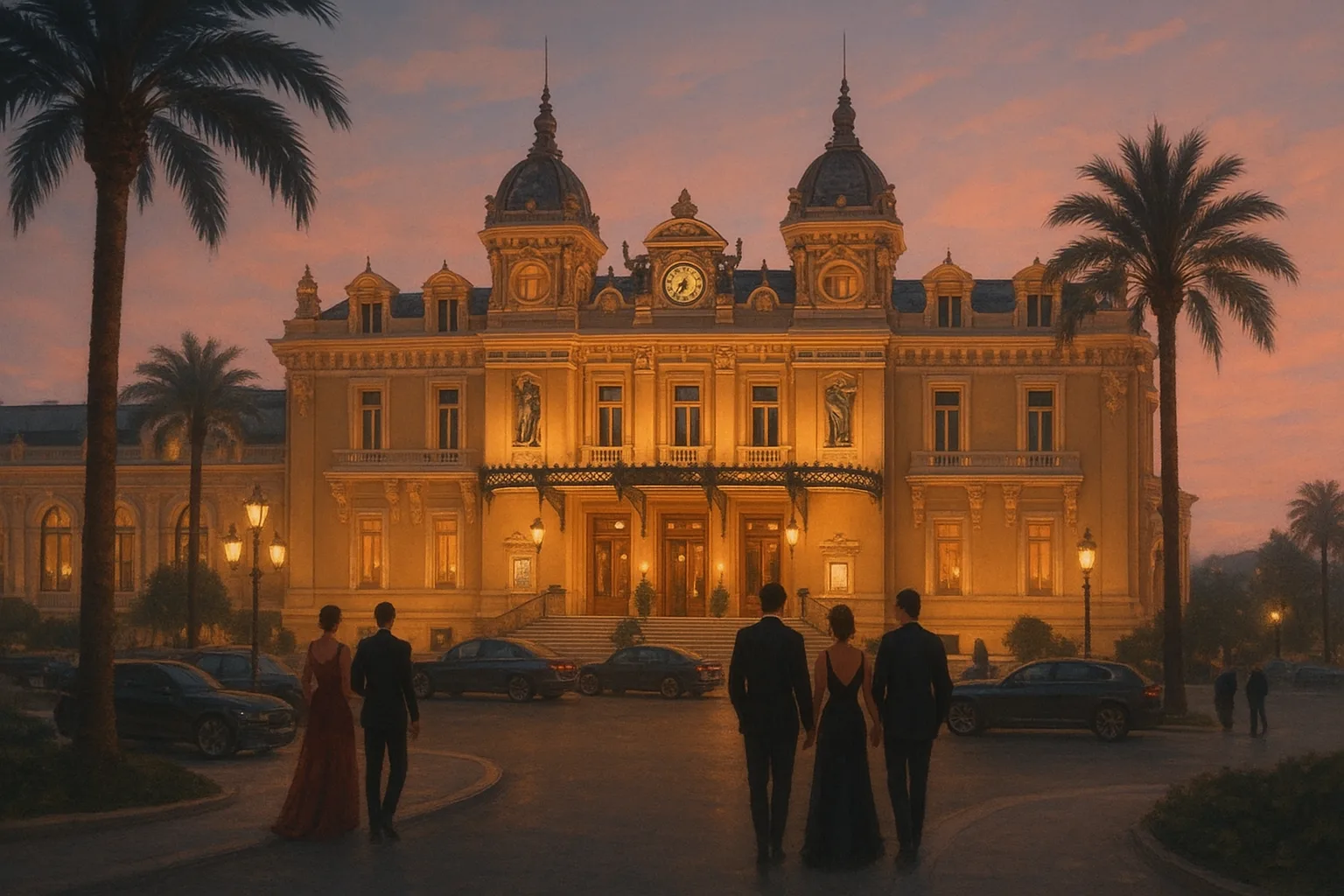
By the time you reach the marble staircase at Casino de Monte-Carlo, you have already walked into a piece of Riviera financial history. Gambling was authorised in Monaco in the 1850s, and in 1863 François Blanc and the newly formed Société des Bains de Mer began developing a dedicated casino on the Plateau des Spélugues under Prince Charles III. The present Belle Époque complex took shape with the major expansion of 1878–79, when architect Charles Garnier added the opera house now known as the Salle Garnier and reworked the atrium and gaming rooms.
Belle Époque architecture you actually notice
Garnier’s building feels closer to a theatre than a modern gambling hall. The main façade on Place du Casino carries a copper dome and twin towers, looking over a fountain, palm trees and the front doors of the Hôtel de Paris and Café de Paris. Step inside and the atrium, paved in black-and-white marble and ringed by onyx columns, sets the tone: a bright hall that filters guests towards the more intimate gaming rooms.
Above the entrance to the tables, a bronze clock flanked by two female figures quietly reminds you that time and money are both at stake. Beyond it, ceilings painted with allegorical scenes, heavy drapery and tall windows frame the action. The Salle Garnier opera auditorium sits in the same complex, crimson and gold, and on many evenings the casino feels like an extension of the theatre foyer.
The building has appeared on screen often, and parts of the 2006 Casino Royale film were shot here. Plenty of first-time visitors arrive expecting a film set and find that the rooms are very much working gaming floors, with dealers, chips and regulars who treat the décor as their normal backdrop.
Casino de Monte-Carlo works best when you treat the building itself as part of the evening, not just the backdrop to a few spins.
Inside the gaming rooms
The public gaming rooms are a procession of Belle Époque details. The main table-games room, often referred to as the Salle Europe, is lined with Corinthian pilasters and paintings of the seasons, with chandeliers casting a warm glow over roulette wheels and baccarat layouts. Tables are spaced to preserve sightlines and a sense of calm rather than to maximise capacity.
A later addition, the Salle des Amériques, feels a touch lighter and more modern but keeps the same palette of gilt trim and velvet. Slot machines are pushed to the edges, in rooms such as the Salle Blanche and a light-filled atrium space, so the central impression is of card tables, wheels and polished wood rather than rows of flashing screens.
During the day, the atmosphere is closer to a private club that happens to welcome visitors. Curious tourists blend with serious players, and you can hear conversations in French, English and Italian under a relatively quiet soundtrack of chips and spinning wheels. After around nine in the evening, the mix tilts towards evening dress and larger bets, and the murmur becomes more multilingual as Russian, Arabic and other languages join the room.
Step outside between hands and the Mediterranean setting reasserts itself. The terrace near Café de Paris looks towards the yachts in Port Hercules, and a few minutes of sea air between sessions is part of the ritual for many regulars.
Games, limits and poker
Casino de Monte-Carlo leans into French and European gaming traditions. Roulette is the headline game and is usually offered on single-zero wheels. On many tables the French rule known as la partage returns half of your stake on even-money bets when zero hits, which brings the house edge on those bets down to roughly 1.35 per cent instead of the 2.7 per cent seen on a standard European wheel and the 5.26 per cent on an American double-zero layout.
Baccarat appears in both punto banco and chemin de fer forms, with the latter attracting players who want a more traditional, slower game. Blackjack runs with familiar European rules on the main floor, and you will also find a selection of electronic roulette and automated table games around the edges.
Slot machines range from simple three-reel cabinets to large video banks with bonus features. Stakes vary from small-cent spins to substantial per-press limits, but the slots never dominate the space in the way they do in many North American resorts. Monte-Carlo remains a table-first house.
The casino also maintains a poker room. Cash games are usually built around Texas Hold’em, and the venue has hosted international tournament series over the years, sometimes in partnership with nearby SBM hotels. The poker room is not open every night and its schedule can change with the season, so it is wise to check current listings or call ahead if your trip revolves around poker.
Minimum bets fluctuate by room and timing. Midweek afternoons tend to see the lowest thresholds on the public floor. During major events or peak evenings, limits rise and some games may switch to higher denominations. High-limit action concentrates in the private salons rather than on the main floor.
Private salons and high-limit play
Behind controlled doors are the Salons Privés, smaller rooms designed for high-limit play and privacy. Décor here is more restrained than on the public floor: wood panelling, heavy curtains, fewer tables and the occasional private terrace. Service tightens up too, with dedicated staff, quieter pacing and options for establishing credit or using private cashiers.
These rooms are where the casino expects its most serious play. Minimums are significantly higher, and a single roulette spin or baccarat hand can involve sums that would represent a full evening’s budget for most visitors. Games lean towards chemin de fer, high-stakes punto banco, elite roulette and blackjack.
Access is rarely purely walk-in. The usual path is through SBM’s player services or via the concierge desk at major hotels such as the Hôtel de Paris Monte-Carlo or the Hôtel Hermitage. If you hope to play in the salons, make contact at least two or three days in advance, be clear about the size of bankroll you plan to bring, and confirm what documentation or deposit the casino expects.
For many guests, the sweet spot is still the main floor, where limits are more manageable and the mix of regulars, yacht crews and visitors creates a sociable crowd without sacrificing the room’s formality.
Dress code, entry and house rules
Monte-Carlo’s dress code is part of its identity and is enforced with a seriousness that surprises some visitors. For the gaming rooms, men should plan on smart trousers, a shirt and a jacket in the evening. Trainers, shorts, beachwear, athletic clothing and baseball caps are turned away at the door, even on warmer nights.
Women face a slightly more flexible standard but the expectation is still smart evening wear: cocktail dresses, tailored separates and polished shoes fit the room, while casual sandals and sportswear do not. The simplest way to avoid a problem is to dress as if you were attending a theatre premiere rather than dropping into a beach bar.
You will be asked for identification at entry. A passport or national identity card is the safest choice; driving licences and photocopies are not always accepted. The minimum age to gamble is 18, and staff enforce that rule firmly. Daytime architectural visits are organised separately and can admit younger guests, but those tours do not include access to operational gaming tables.
Photography is prohibited inside the gaming rooms, and mobile phones should stay off the felt and out of other players’ line of sight. Speaking quietly and keeping calls to lobby areas is appreciated by staff and regulars alike.
There is an admission charge for adults. At the time of writing, standard entry to the casino complex for adults is around twenty euros, with different pricing structures for heritage tours and salon access. Fees and conditions can change, so confirm current terms on the official Monte-Carlo SBM channels before you travel.
Timing your visit around Monaco’s calendar
Monaco’s social calendar shapes the feel of the casino more than any single design choice. In January, the Monte-Carlo Rally brings motorsport fans and sponsors to the principality. In April, the Monte-Carlo Masters tennis tournament fills hotels with players, coaches and corporate guests who spill into the gaming rooms after matches.
Late May is dominated by the Monaco Grand Prix, when grandstands line the harbour, superyachts cluster in Port Hercules and many rooms, including the casino, run at full capacity. Hotel rates climb, table minimums often increase and the atmosphere becomes festival-like. If you want the most glamorous, busiest version of Monte-Carlo, this is it. If you prefer to hear the wheel more clearly than the crowd, choose another week.
In late September, the Monaco Yacht Show brings owners, captains and crew to the square, and demand for private salons and high-limit tables rises with them. Through autumn and spring, the opera and ballet seasons add an extra layer of guests who treat the casino as a pre- or post-performance stop.
For a more measured visit, look to midweek dates in late autumn or late winter, when the big events are over, the weather is still workable for terraces, and both hotels and tables feel more relaxed. Christmas and New Year bring spectacular decorations and busy rooms, but they also push prices and crowding up.
Arrivals, hotels and planning the night
Casino de Monte-Carlo sits on Place du Casino, facing a central fountain and framed by the façades of the Hôtel de Paris and Café de Paris. The Monaco-Monte-Carlo railway station is roughly a ten to fifteen minute walk away via escalators and lifts through the hillside. Nice Côte d’Azur airport sits about half an hour away by road, depending on traffic, and some guests choose helicopter transfers direct to Monaco’s heliport.
Parking in the centre is limited. The practical options are hotel valet services or the underground public car parks nearby. If you are staying in one of the major SBM hotels, let the concierge know your casino plans; they can reserve tables, arrange introductions to player services and ensure charges and credit facilities are set up correctly before you arrive at the door.
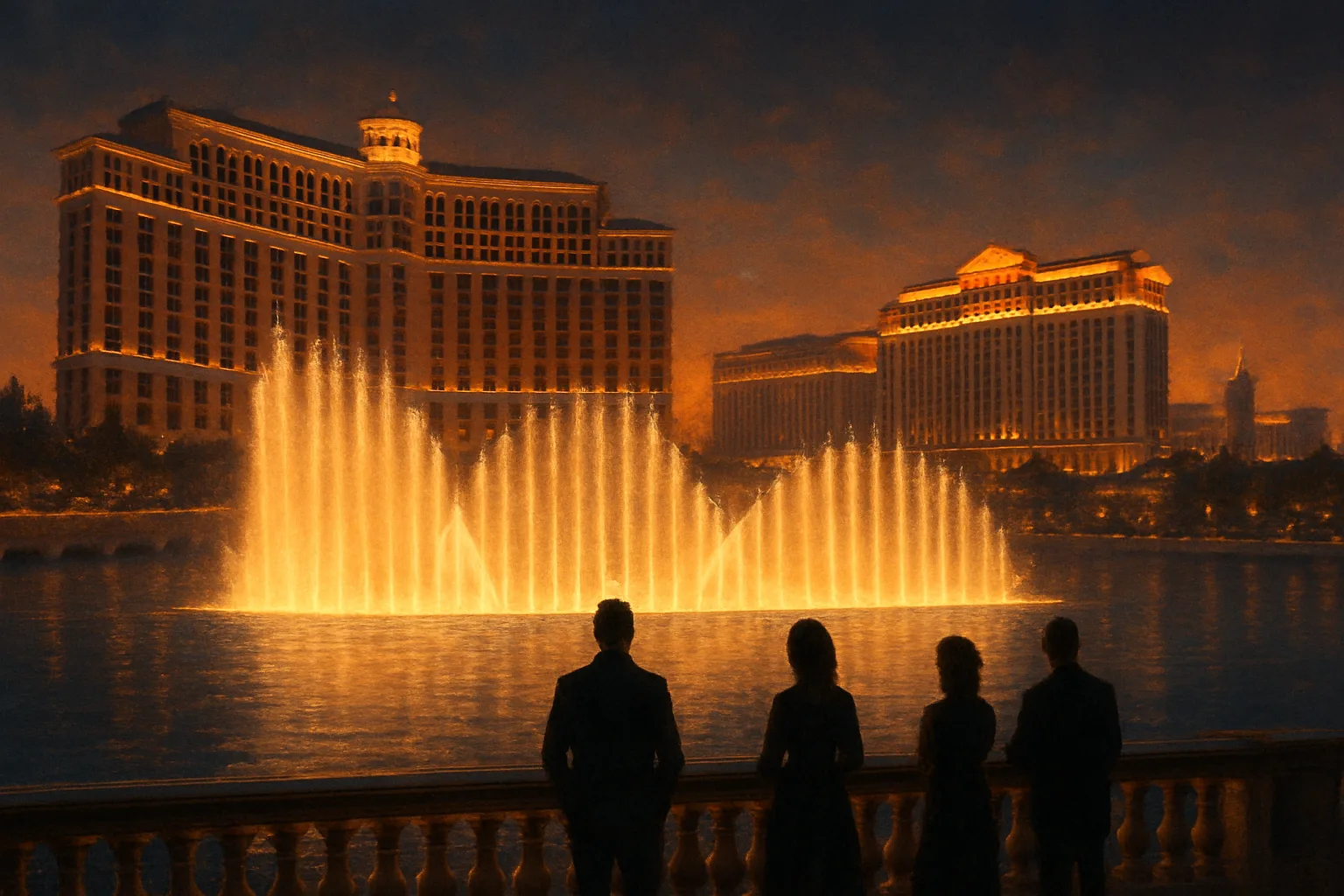
Eat before you enter the gaming rooms. Monte-Carlo offers restaurants within the casino complex, but many visitors prefer to start the evening with dinner at Café de Paris or at one of the hotel dining rooms, then move to the tables without worrying about a long meal in between hands. If you enjoy comparing how different resorts stage their spectacle and high-limit play, our profile of Bellagio Las Vegas gives a useful foil to Monte-Carlo’s more architectural, sea-facing style.
First-time visitor tips
If this is your first visit, treat Casino de Monte-Carlo as a structured evening out rather than a casual drop-in. A few practical habits make the night smoother:
- Set a clear budget in euros before you walk through the door and stick to it.
- Arrive slightly before the main evening rush to see the rooms half-full and find a comfortable table.
- Watch a few spins or hands at each game before you buy in, so you understand the pace and etiquette.
- Start with French roulette or blackjack if you want simple rules; move to baccarat or chemin de fer once you are comfortable.
- Call ahead for poker schedules or any hope of private-salon play, rather than relying on chance.
- Avoid Grand Prix week if your priority is calm tables and lower minimums.
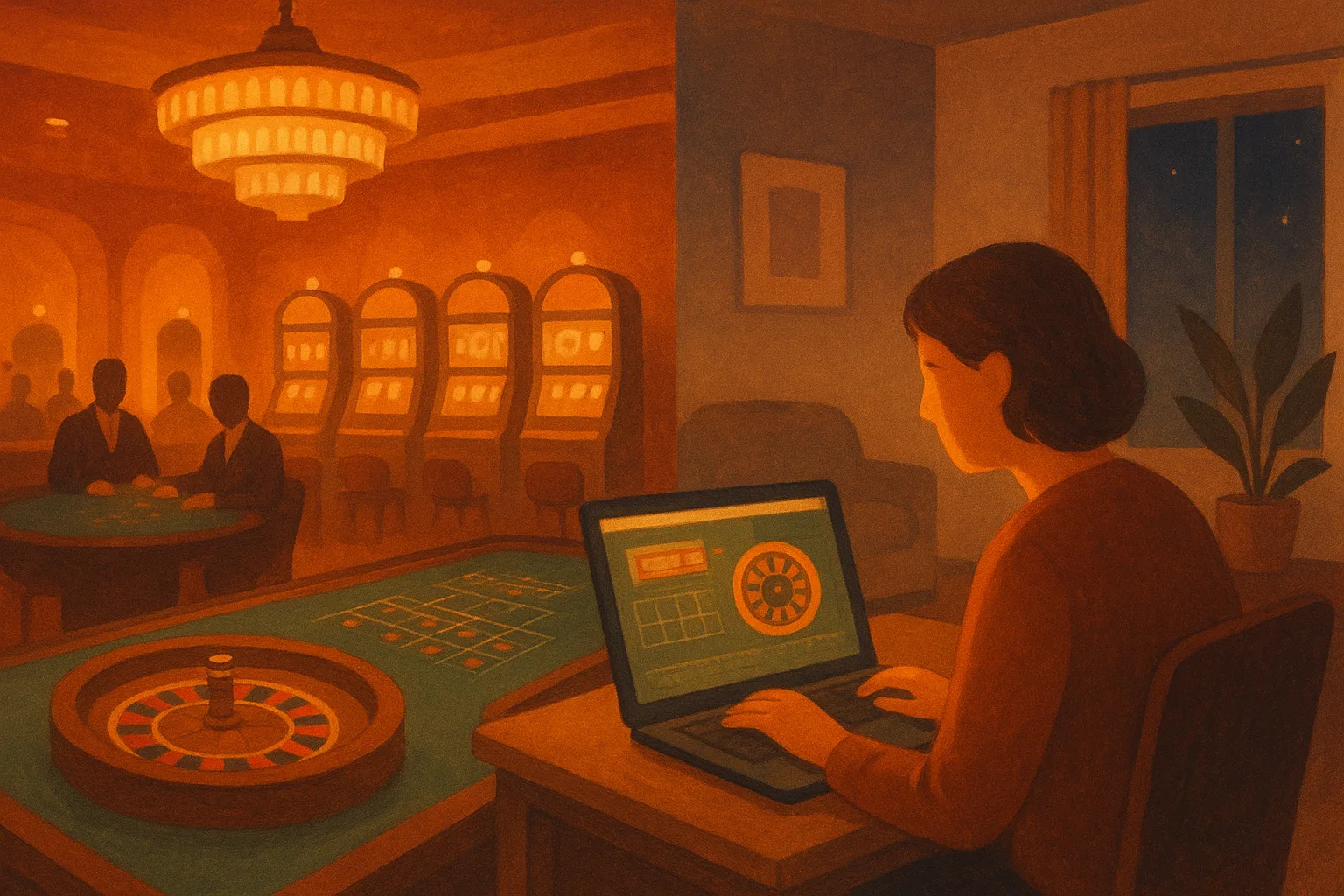
If you are new to casinos in general and want to understand how a grand European house compares with online platforms, our guide to land-based vs online casinos is a helpful primer before you book.
Monte-Carlo’s casino rewards people who pay attention. Look up at the ceilings before you place a bet, listen to how dealers manage the pace of each table and step outside once or twice to see the square at different hours. The house has been shaping evenings on this corner of the Riviera since the nineteenth century; planning yours around its rhythms is part of what makes the visit memorable.